


Just ten years ago, the procedure for establishing a foreign-invested company in China resembled navigating a labyrinth with many closed doors. The foreign investor was forced first to find the “right key” – a special permit – and only then received the right for their company to exist in the form of a business license.
This approach, burdened by barriers inherited from the era of “opening up,” created a field of uncertainty and significant time costs at the start.
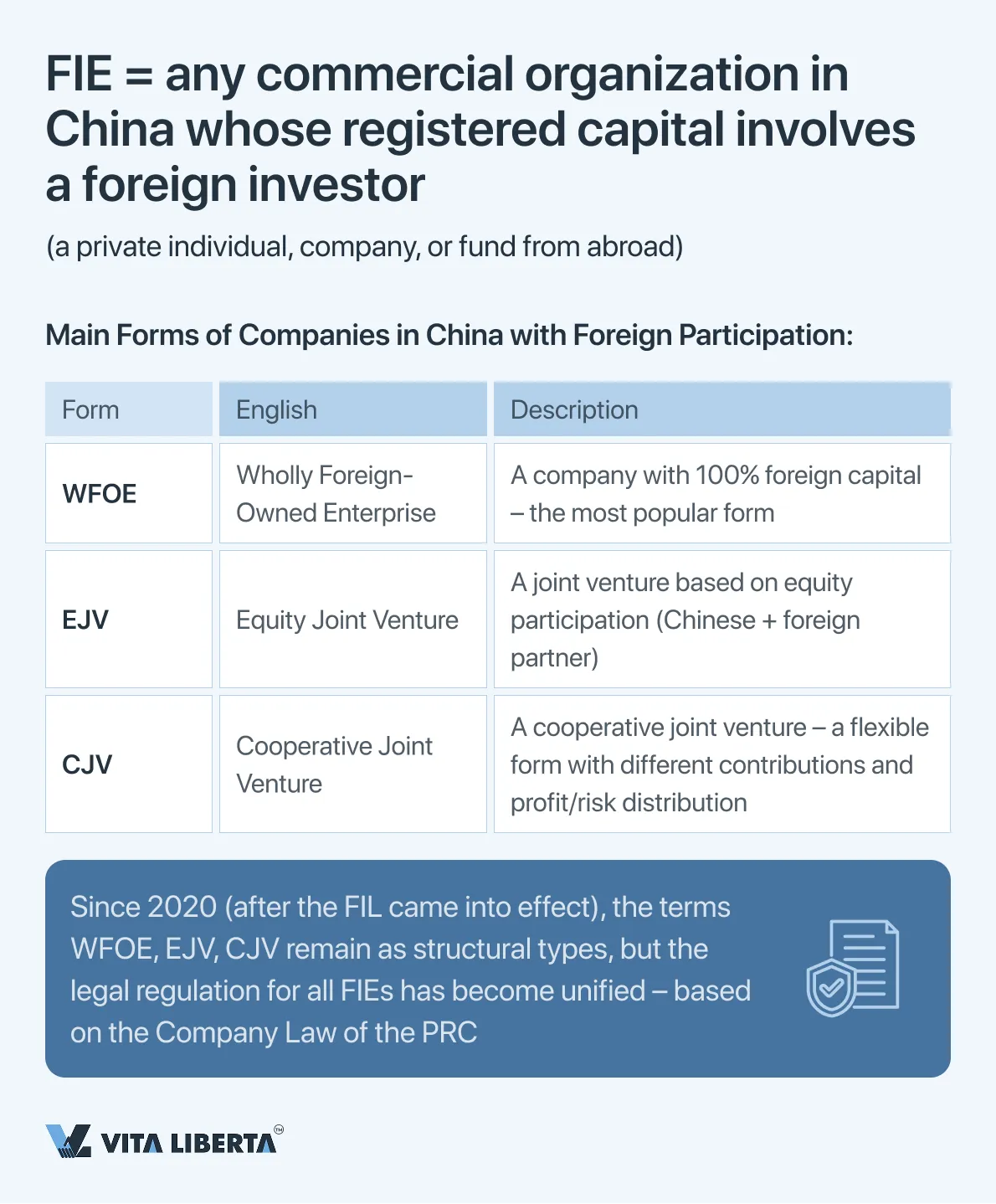
The situation has undergone a radical transformation. Today, China offers foreign capital not a labyrinth but a clear and largely standardized registration roadmap, fundamentally changing the regulatory philosophy. The introduction in 2020 of the Foreign Investment Law (FIL) became not merely a legal reform but a symbolic “reboot” of the system, replacing three different sets of rules for various types of enterprises with one common standard.
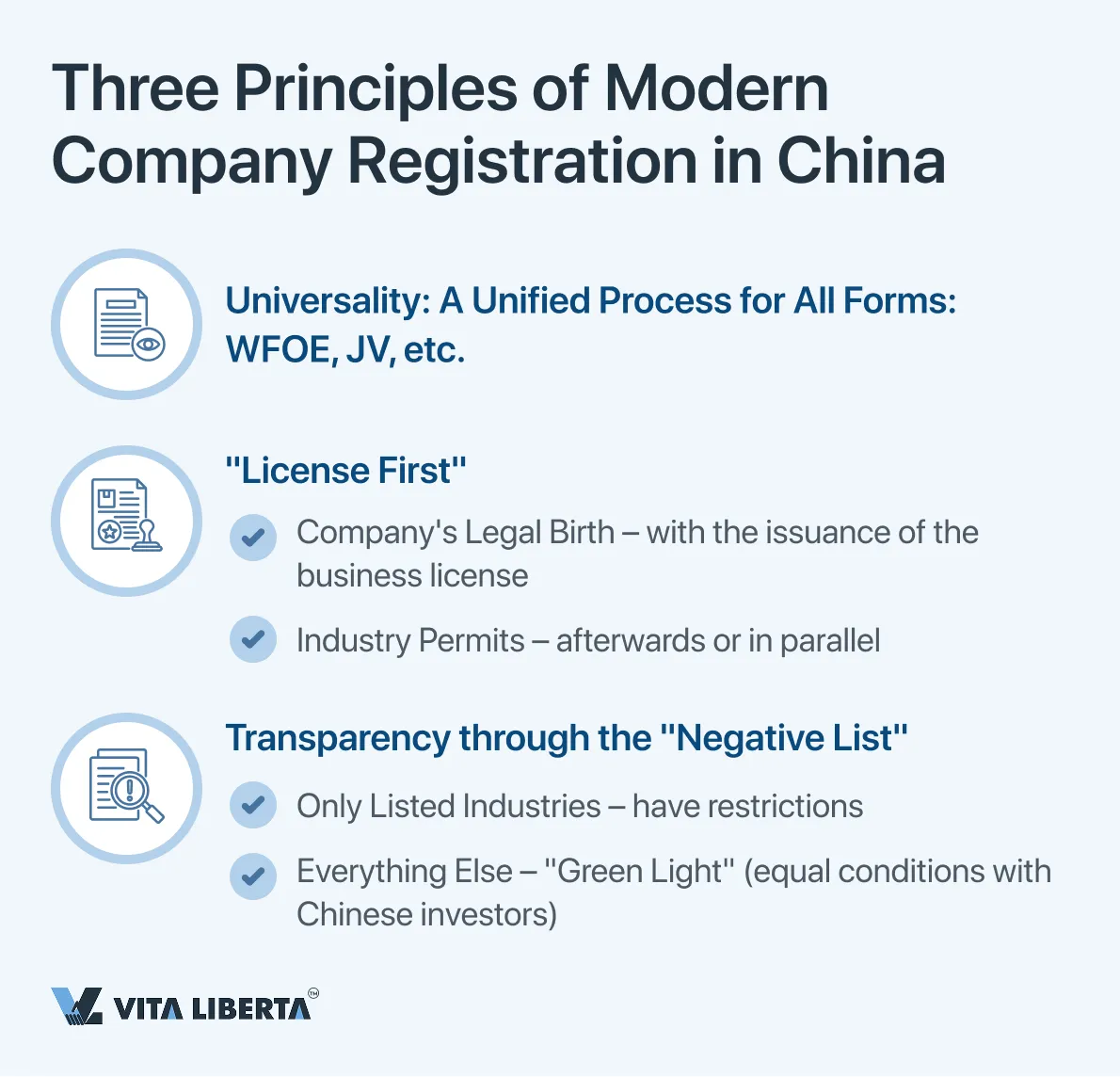
The modern process can be characterized by three key principles:
- Universality: Regardless of whether the company is a joint venture or wholly foreign-owned, the basic registration process follows unified rules.
- “License First”: The company is legally born at the moment the business license is issued, allowing for quick market entry, while necessary industry-specific permits are obtained in parallel or afterwards.
- Transparent Boundaries: The main reference point for an investor is the “Negative List” – an exhaustive and publicly available list of industries with restrictions. If the business sector is not included in it, the path to registration is maximally straightforward and comparable to the procedure for a Chinese investor.
This article serves as a detailed navigator through this updated system. We will break down the standard registration procedure step by step, explain the logic behind the “Negative List,” and highlight special scenarios for large-scale projects requiring capital construction. Understanding this structure is the first and decisive step toward the successful and predictable legalization of your business in China.
Legal Basis for Foreign-Invested Enterprises in China
Since January 1, 2020, the regulation of foreign investment in China has entered a new era thanks to the entry into force of the Foreign Investment Law of the People’s Republic of China (FIL). This foundational document replaced the outdated tripartite system, unified the legal landscape, and significantly strengthened the protection of foreign investors’ rights.
Key Change: Unification of Legislation
The new law completely repealed the three previous specialized laws that regulated different forms of foreign presence:
- Law on Sino-foreign Equity Joint Ventures;
- Law on Sino-foreign Cooperative Joint Ventures;
- Law on Wholly Foreign-Owned Enterprises.
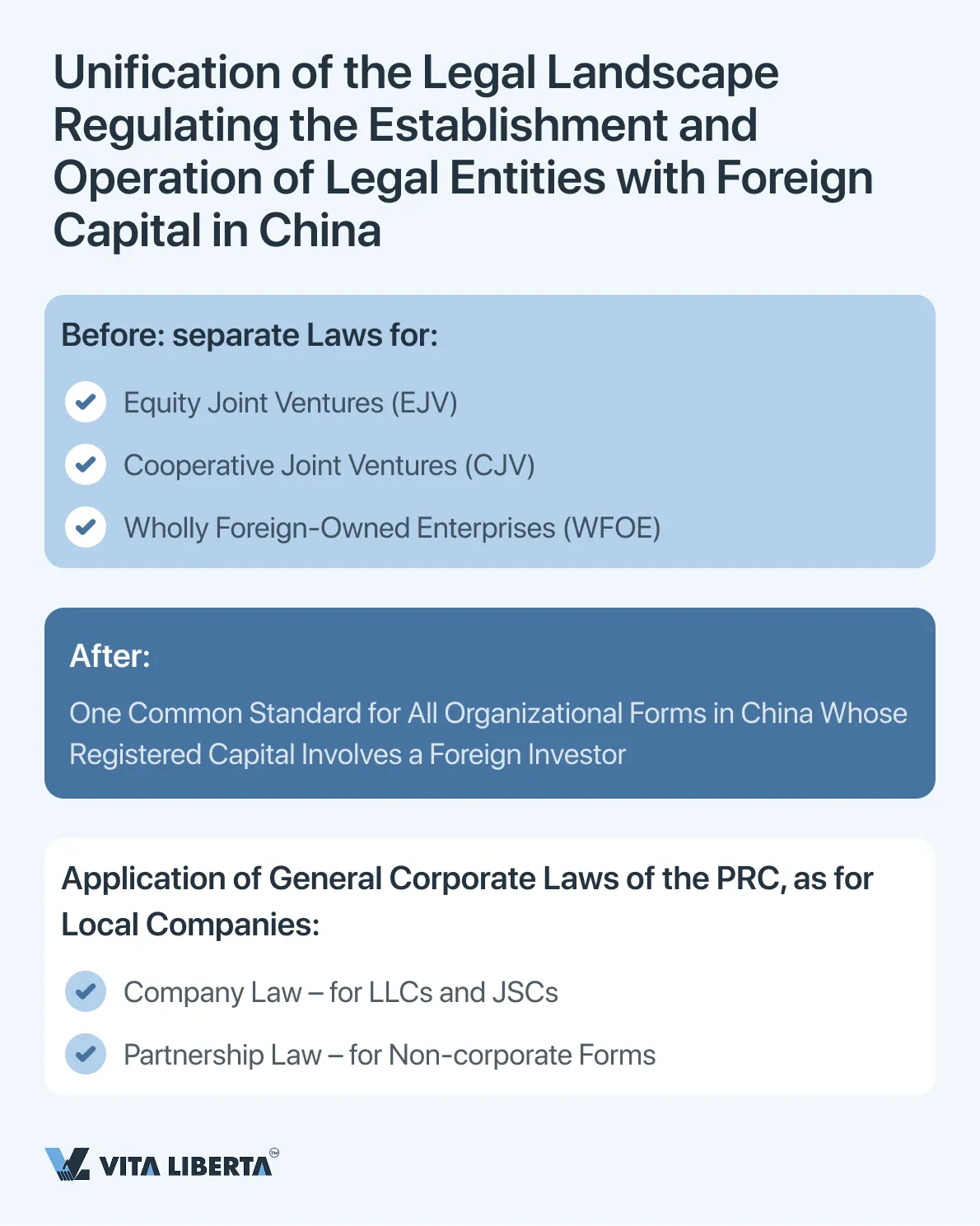
Thus, all foreign-invested enterprises (FIEs) – whether joint ventures or companies with 100% foreign capital – now adhere to the same basic corporate laws of the PRC, similar to local companies:
- For legal entities: The Company Law of the PRC (on limited liability companies or joint-stock companies) applies.
- For non-corporate forms (e.g., partnerships): The Partnership Law of the PRC applies.
Within the scope of this review, the focus is on the most common form – companies established in accordance with the Company Law.
National Treatment and the “Negative List”: The Dual Foundation of China’s Economic Openness
China’s legal framework for investment proclaims the principle of national treatment as fundamental. This guarantees foreign investors and companies equal business conditions with domestic players, the application of identical standards, and legal protection in the vast majority of industries.
Exceptions to this general rule are systematized and transparent thanks to the “Negative List for Market Access of Foreign Investment” mechanism. This list, subject to regular review and consistent reduction, serves as a clear regulator. It structures industries into two categories of restrictions:
- Prohibited for foreign capital. This includes strategic and sensitive sectors where foreign investment is completely excluded (for example, defense industry, certain media services).
- Restricted for foreign capital. In these sectors, investment is permissible but subject to specific conditions, such as an established limit on the share of foreign participation in the registered capital (for example, 50% or 51%) or a requirement to appoint a Chinese resident to certain management positions (as in the financial sector or telecommunications).
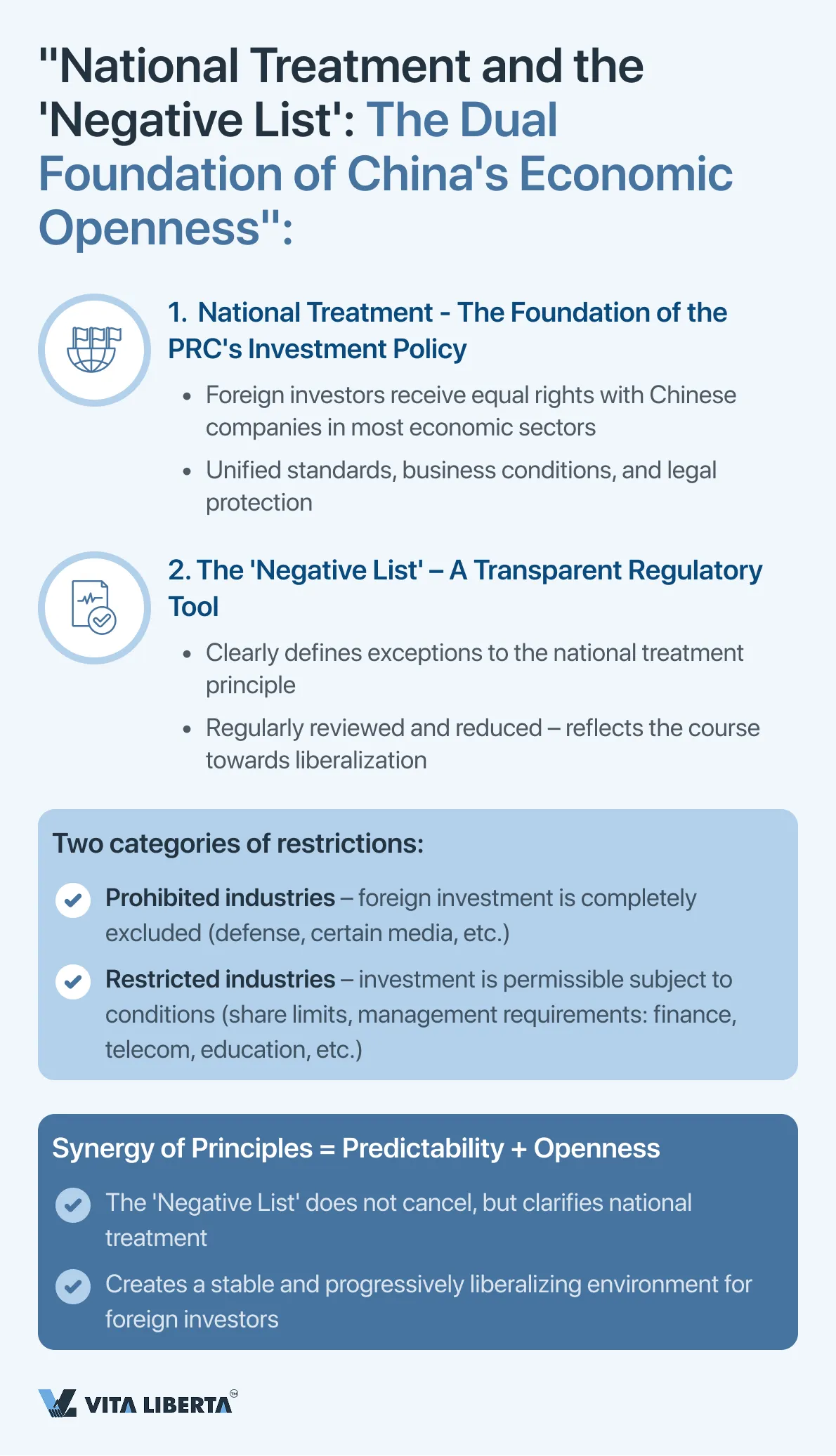
The Chinese model combines the principle of equality with strategic caution: national treatment ensures openness, while the ‘negative list’ provides control over sensitive sectors. This makes the investment environment in China both attractive and manageable.
Free Trade Zones: Preferential Treatment and the “Shortened List”
In addition to the national regulatory system, China employs a targeted tool for deepening openness – the special regime of Free Trade Zones (FTZs). Such zones, including leading financial and innovation hubs (Shanghai, Hangzhou, Guangdong, Tianjin, Hainan, etc.), function as experimental platforms for accelerated development.
Their key feature is the application of a special, “shortened” Negative List, which contains significantly fewer restrictions for foreign capital compared to the nationwide list. This provides investors in FTZs with preferential access to sectors that remain restricted in other parts of the country (for example, telecommunications, education, healthcare). Thus, FTZs serve as “testing grounds”: new models of openness are trialed here and, after successful implementation, can be scaled up across the entire country.
The 2020 reform, which enshrined the principle of national treatment in legislation, created a unified and transparent framework for foreign investment. In this system, FTZs act as locomotives of continuous liberalization. They not only attract high-tech projects through preferential conditions but also practically demonstrate the effectiveness of further reducing restrictions, thereby generating demand for updating the nationwide list.
Foreign-Invested Company Registration in China
- WFOE setup for foreign investors
- SAMR documentation preparation
- End-to-end support until business license issuance

Company Registration Procedure for Foreign-Invested Enterprises in China
The procedure for registering a foreign-invested company in China continues to become more standardized and transparent. A key trend for 2026 is the shift in focus from formally completing the registration process to the strict compliance of a company’s actual activities with its statutory documents, licenses, and subsequent tax accounting. Authorities expect accuracy, transparency, and full alignment of declared objectives with real business activity.
Despite global challenges, China remains attractive to investors, as evidenced by the registration of 53,782 new foreign-invested enterprises (FIE) in the first 10 months of 2025, a 14.7% increase compared to the previous year.
- Key Decisions at the Pre-registration Stage
The success of the entire process is laid at the preparation stage, where two fundamental decisions must be made.
- Choice of Organizational-Legal Form: This determines taxation, HR policy, and market exit options. The main options are:
- Wholly Foreign-Owned Enterprise (WFOE): The most popular form, ensuring full control. Suitable for trade, services, manufacturing, and R&D.
- Joint Venture (Equity or Contractual): Used when the presence of a Chinese partner is a mandatory requirement (according to the “Negative List”) or strategically advantageous.
- Representative Office: Suitable only for research, marketing, and coordination activities. Cannot directly conduct commercial activities or generate revenue.
- Determination of Business Scope: This is a critically important step. Authorities require clear and specific wording that must fully correspond to actual operations. Too broad a description will raise questions, while too narrow a description will limit growth. The choice of scope also determines the need to obtain special permits (licenses).
- “Negative List” Context: Checking against the current “Negative List for Market Access of Foreign Investment” remains mandatory.
- New Opportunities: Concurrently, it is worth studying the “Catalogue of Encouraged Industries for Foreign Investment” (the latest version effective from February 1, 2026), which adds 205 new items, especially in advanced manufacturing and high technology. Furthermore, preferential conditions apply for the services sector in 20 pilot cities, for example, lifting restrictions on foreign capital share in internet services.

2. Procedure for Establishing a Limited Liability Company (LLC) in China: A Step-by-Step Algorithm
The registration of a legal entity in China is a strictly regulated administrative procedure, where each subsequent stage is initiated only after the result of the previous one is recorded in unified state registries. The modern regulatory paradigm is based on the principle of end-to-end digital integration between authorities (SAMR, State Taxation Administration, State Administration of Foreign Exchange, banking system), which eliminates the possibility of providing conflicting data at different stages of the process.
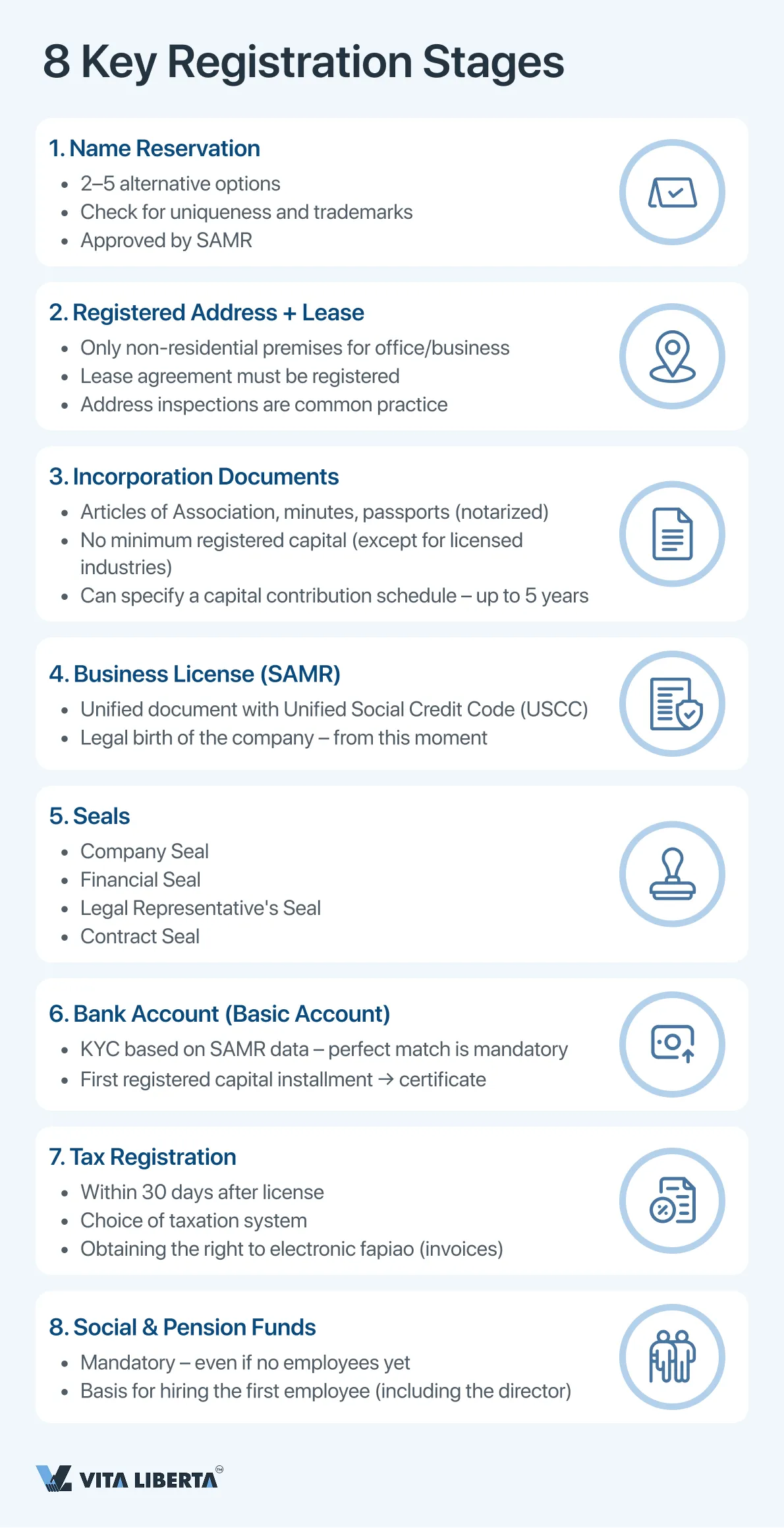
Stage 1. Reservation of the Legal Entity’s Name
Submitting an application to the local branch of the State Administration for Market Regulation (SAMR) for preliminary approval of a unique company name. The name is checked for compliance with the rules for composing company names, absence of duplicates, and similarity to the point of confusion with already registered companies and registered trademarks in the jurisdiction. It is recommended to submit 2 to 5 alternative options to minimize time costs in case of rejection.
Stage 2. Legalization of the Registered Address and Registration of the Lease Agreement
Formalization of a lease agreement for non-residential premises, which will serve as the company’s registered address, followed by its mandatory registration with the competent authorities. The leased premises must have the designated purpose “for commercial/office activities.” Using residential property for registering a legal entity is prohibited.
A standard model lease agreement is subject to official registration at the Real Estate Management Center. An unregistered agreement has no legal force for company registration purposes.
Owners of business centers often provide a package of documents from the owner (lease agreement) necessary for submission to SAMR. Verification of the address for compliance with the “actual location” is a common practice of regulatory authorities.
Stage 3. Preparation, Notarization, and Submission of Incorporation Documents
Forming a package of corporate documents and submitting it to SAMR to obtain approval for the company’s establishment.
Key documents:
- Company Registration Application.
- Articles of Association.
- Resolution/Minutes of Incorporation.
- Identity documents of the founders and appointed directors (for foreign individuals – notarized and legalized copies of passports).
- Proof of legality of the registered address (registered lease agreement + documents from the owner).
- Declaration of the registered capital amount.
Currently, for the vast majority of industries, there is no legally established minimum registered capital amount. The concept of “subscribed capital” provides flexibility to founders.
Founders independently declare the total amount of registered capital in the Articles of Association. It is permissible to establish a schedule for its actual payment (Contribution Schedule) within a set period, which can be up to 5 years from the date of registration. This schedule can be fixed in the Articles of Association or determined by the owner at their discretion.
The declared amount must be economically justified by the business plan.
Stage 4. Obtaining the Business License (Legal Entity Registration Certificate)
After document verification, SAMR issues a unified license document – the Company Business License. This document is unconditional proof of the creation of a legal entity, containing its unique registration number (Unified Social Credit Code). Without this license, any subsequent legally significant actions are impossible.
Stage 5. Production and Registration of the Company’s Official Seals
Based on the business license, the company’s physical seals are produced at an accredited public security bureau branch. The mandatory set of seals includes:
- Company Seal (公章),
- Financial Seal (财务章),
- Legal Representative’s Seal (法人章),
- Contract Seal (合同章).
Each seal is registered with the police and has a unique number. The legal force of a document is determined by the presence of the “impression of the company seal” on it, not just a signature.
Stage 6. Opening the Corporate Basic Capital Account
The company applies to a chosen Chinese bank to open its first settlement account. The bank conducts the “Know Your Customer” (KYC) procedure in strict accordance with the data already entered into the SAMR system. Any discrepancy (for example, in the spelling of the director’s name, address) will lead to refusal. It is into this account that the first portion of the registered capital is deposited in accordance with the approved schedule. After confirming the payment, the bank issues a Capital Contribution Certificate (入资证明), which is critically important for the next stage.
Stage 7. Registration with the State Taxation Administration
Mandatory registration with the tax office at the place of registration within 30 days after obtaining the license. Data from SAMR is automatically transferred to the tax system. At this stage, the following occurs:
- Final data verification.
- Determination of the taxation system (general or simplified).
- Obtaining permission to use electronic invoices (Fapiao).
- Signing an agreement with the bank for automatic tax withholding (Tax Withholding Agreement).
Stage 8. Registration with Social Security and Pension Funds
Registration with local social security and housing provident fund management centers.
Registration is a mandatory prerequisite for the legal employment of any employee, including the founder-general director. Non-compliance results in significant fines and operational blocking.
After completing the eight stages, the company acquires full legal capacity. However, to begin operational activities, obtaining additional industry-specific permits may be required, the list of which is determined by the industry codes specified in the business license.
3. Special Cases and Additional Procedures for Company Establishment in China
Special Cases: “Greenfield” Projects and Capital Construction
For investment projects involving the construction of new facilities from scratch (factories, logistics centers, technology parks), the company establishment procedure is an expanded and multi-stage process. In addition to the standard legal entity registration, the investor must undergo a complex set of preliminary approvals and obtain specialized permits before commencing construction work and commissioning the facility.
- Preliminary Approval and Strategic Review
The initial phase involves interaction with authorities responsible for strategic planning and investment policy—the National Development and Reform Commission (NDRC) or its regional branches.
The project undergoes an assessment for compliance with national and regional industrial priorities, with its scale, energy intensity, and overall strategic significance analyzed. For energy-intensive industries, a separate requirement is conducting an energy audit and providing a plan for improving energy efficiency.
b. Construction, Environmental, and Expert Procedures
Following strategic approval, the stage of detailed project coordination with specialized regulatory authorities begins. These processes can often be initiated or conducted in parallel.
Urban Planning: Obtaining an approved land use plan and construction permit from local architecture and urban planning authorities.
c. Environmental Impact Assessment (EIA): Conducting an environmental impact assessment, coordinated with the local environmental protection bureau. Mandatory for industrial, chemical, and other facilities with potential environmental risk.
Occupational Health, Safety, and Environmental Protection (EHS): Developing and coordinating a package of documents on occupational risk assessment, fire safety, and sanitary and hygienic standards. The strictness of requirements varies by region: in megacities (Shanghai, Shenzhen), they are typically significantly higher than in less developed provinces.
Although these procedures can be carried out in parallel, their successful completion is an unconditional prerequisite for the start of construction and the subsequent commissioning of the facility.
d. Industry Licensing After Facility Creation
After completing construction and registering the company, the investor proceeds to obtain special industry licenses, which grant the right to engage directly in business activities. For example:
- Food production requires a food business license.
- Pharmaceutical manufacturing is impossible without product registration and GMP certification.
- Activities in the education sector are subject to licensing by the applicant.
Exception: Sectors with Preliminary Permitting Procedure
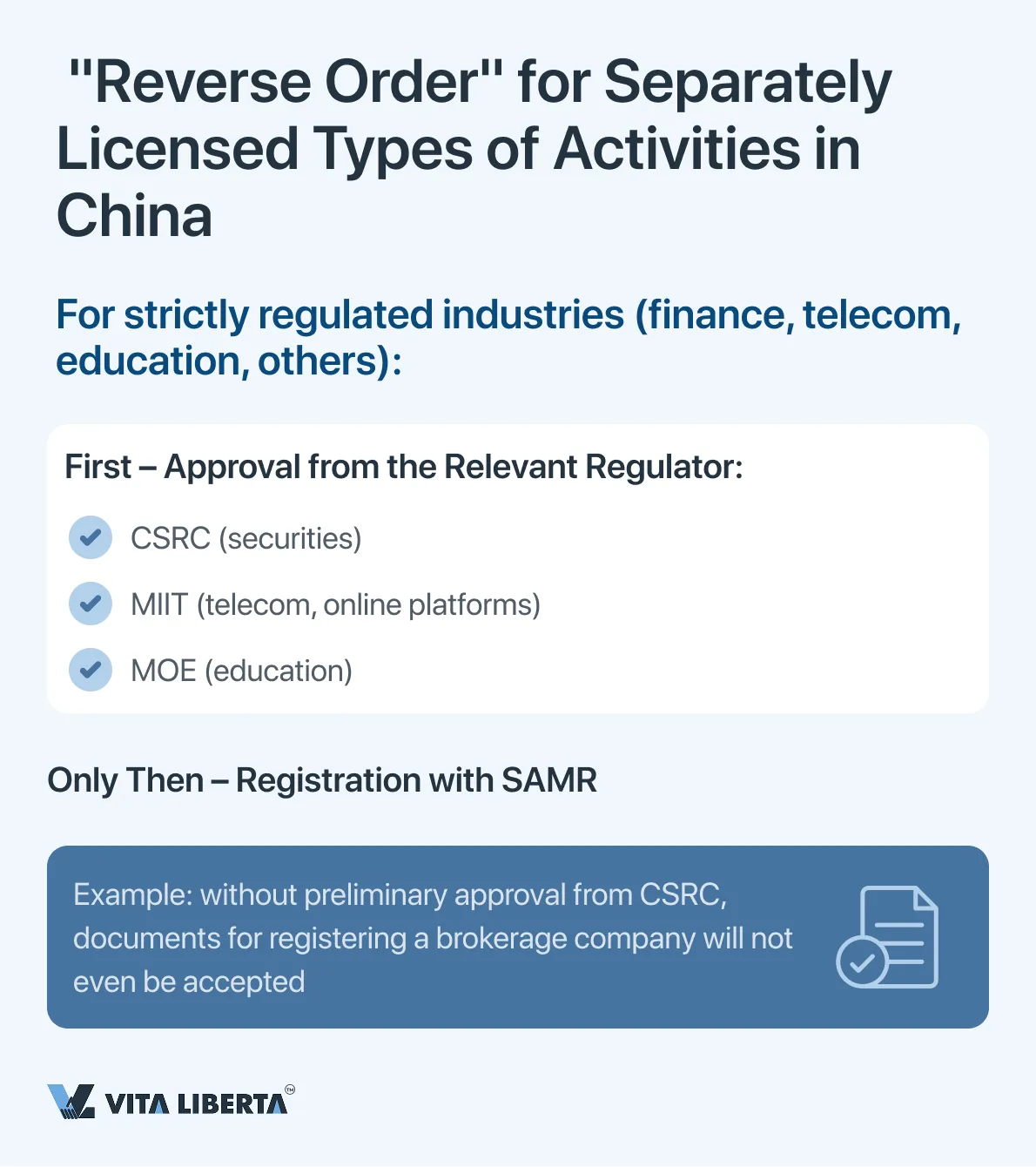
For a number of strictly regulated sectors (finance, telecommunications, education with foreign participation, etc.), a reverse order of legalization applies. In these cases, the investor is first obligated to obtain preliminary approval from the industry regulator and only after that has the right to register the company with SAMR.
Example: to establish a company in the securities market, preliminary approval from the China Securities Regulatory Commission (CSRC) is required. Only with this decision in hand can the founders submit documents to obtain a business license.
Thus, implementing a “greenfield” project requires not only significant capital investment but also a deep understanding of the multi-level system of administrative approvals, where the sequence of actions and interaction with specialized authorities are of critical importance for success.
List of Required Documents for the Registration of a Foreign-Invested Company
The formation of a foreign-invested enterprise in China is associated with strict compliance with a regulated documentation process. The list presented below reflects the exhaustive set of official papers required to initiate the registration procedure with the State Administration for Market Regulation (SAMR) and other authorized bodies. Each document must meet established formal criteria, and its content must comply with the norms of Chinese corporate law.
- Incorporation and Registration Forms (Establishment Registration Forms)
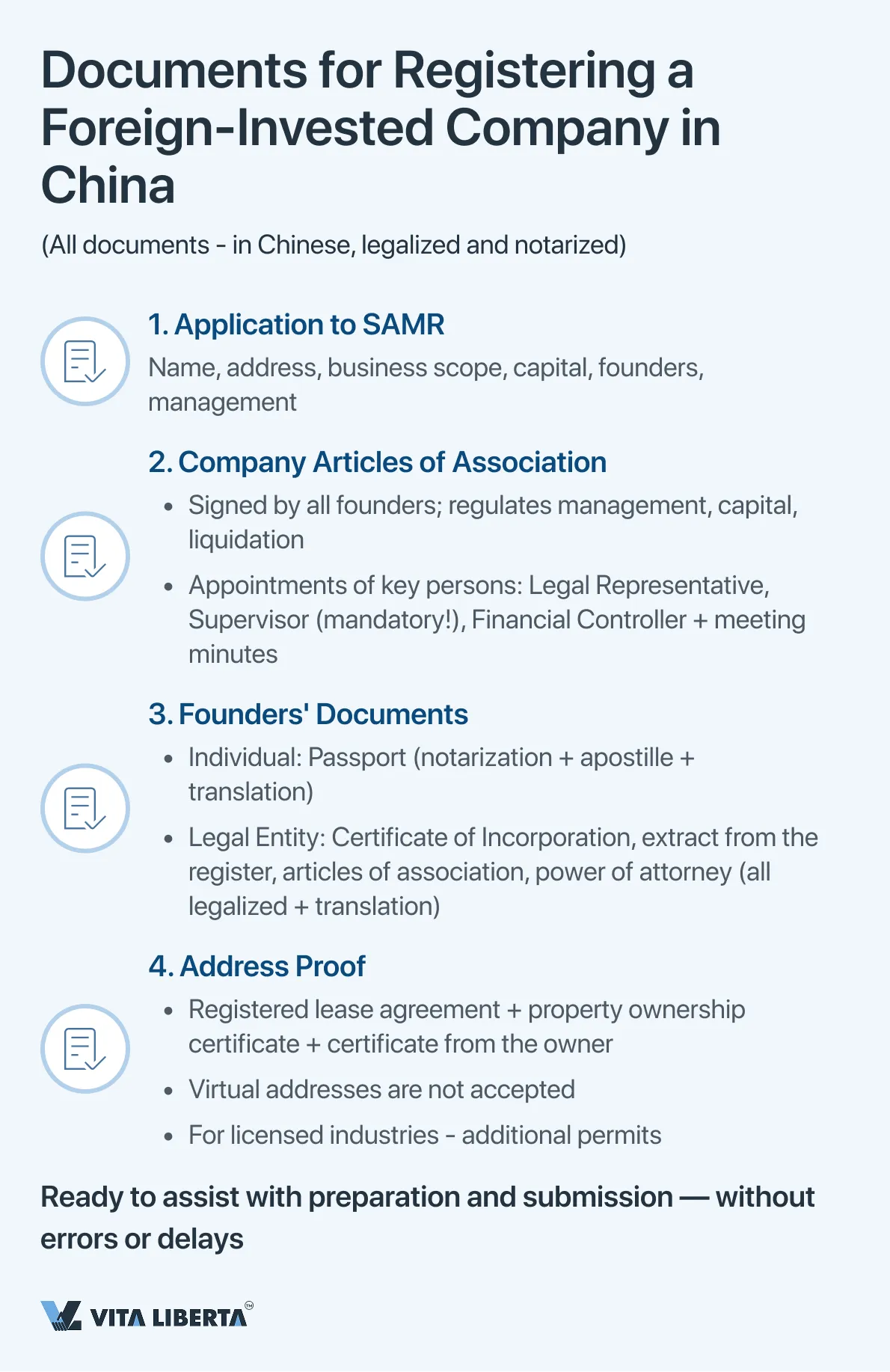
Company Registration Application on the SAMR form – A unified form containing legally significant declarations: the company’s full name in Chinese, the declared amount of registered capital, its payment schedule, information about the founders, management structure, registered address, and types of economic activity (business scope). The applicant’s (future legal representative’s) signature is subject to verification. - Constitutional Document
Company Articles of Association – The internal set of rules regulating the company’s activities. The document must include provisions on the purpose of establishment, the amount and distribution of registered capital shares, the rights and obligations of investors, the competence and formation procedure of executive and supervisory bodies, the procedure for making key decisions, as well as conditions for liquidation. The Articles of Association are signed by all founders and serve as the basis for resolving corporate disputes. - Documents on the Formation of Corporate Bodies (Corporate Governance Appointments)
Shareholders’ Resolution/Minutes of the Incorporation Meeting – Records the collective decision of the founders to establish the company, approve its Articles of Association, and appoint key officers.
Appointment Letters – Individual official documents confirming the authority of:
Legal Representative – The person authorized to act on behalf of the company without a power of attorney.
• Supervisor – A mandatory control body for a limited liability company, not part of the executive management. The appointment of a supervisory board member or a sole supervisor is an imperative legal requirement.
• Financial Controller – The employee responsible for maintaining accounting records and interacting with tax authorities.
- Documents Certifying the Legal Capacity of Founders (Investor Identity and Capacity Proof). For foreign individuals: A copy of a valid passport, notarized in the country of citizenship and legalized via apostille or consular legalization in China. A notarized translation into Chinese is required.
For foreign corporate founders:
• Certificate of Incorporation or equivalent document confirming legal status.
• A valid certificate of good standing or extract from the commercial register, certifying that the company is not in the process of liquidation or bankruptcy.
• Articles of Association or similar constitutional document.
• A document confirming authority, permitting this person to sign the incorporation documents of the Chinese company on behalf of the foreign investor.
All listed documents are subject to notarization, legalization (apostille/consular legalization), and translation into Chinese.
- Documents Confirming the Legitimacy of Using the Registered Address
Chinese legislation requires the provision of indisputable proof that the company has a real non-residential premises for conducting activities. The following documents are accepted:
• Standard Lease Agreement, signed with the owner of commercial real estate and having undergone mandatory registration at the local Real Estate Management Center. The lease term, as a rule, must be at least one year.
• Property Ownership Certificate (房产证): A copy provided by the landlord.
• Address Filing Form (住所经营场所使用证明): A document in the prescribed form, issued by the property owner or the management company of the business center, confirming consent to use the address for registering a legal entity.
The use of so-called “virtual offices” or P.O. boxes for the initial registration of an FIE is not legally permitted. SAMR reserves the right to conduct an on-site inspection of the specified address.
This set is basic and mandatory for initiating the procedure. Depending on the specific administrative district, the specifics of business activities (e.g., those restricted for foreign investment), and the requirements of industry regulators, authorized bodies have the right to request additional permits or approvals. It is recommended to prepare the package with the assistance of a qualified local consultant or lawyer.
The procedure for registering a foreign-invested company in China is a clearly structured but multifaceted process, reflecting the balance between openness to international capital and the strategic regulation of the national economy. Successful navigation of this path requires from the investor not only meticulous document preparation but also a deep understanding of the logic of the Chinese legal field and administrative system.
The key stages on this path remain: the strategic choice of the correct form of investment (WFOE, joint venture, representative office) aligned with long-term business goals; preliminary approval of a unique company name; obtaining all necessary approvals and licenses for regulated activities; and the correct preparation of statutory documents, primarily the Articles of Association, which must account for Chinese regulatory requirements. The final steps – obtaining the business license, registration with tax, customs, foreign exchange, and statistical authorities – legalize the activity but mark the beginning of the next critically important stage: operational compliance with continuously evolving legislation.
In recent years, significant simplification and digitalization of many administrative procedures, lowering of barriers in a number of industries, and increased transparency have been observed. Nevertheless, complexities such as the correct classification of activities by GB/T codes (similar to OKVED), compliance with registered capital requirements, nuances of labor law, and cross-cultural communication barriers remain relevant. Therefore, an indispensable condition for minimizing risks and time costs is engaging qualified local specialists – lawyers, consultants, and accountants.
Ultimately, company registration is not a bureaucratic finish line but a strategic starting point. A company that is registered competently and professionally, with a clear legal structure and an understanding of its obligations, lays a solid foundation for sustainable development, building trust with Chinese counterparties and authorities, and fully realizing the enormous potential of the Chinese market. Thus, the investment of time and resources at the establishment stage pays off with long-term stability and the ability to effectively focus on core business in China’s dynamic and competitive environment.
Open a Company in China as a Foreign Investor
- Negative List eligibility check
- FIE structure preparation
- Licensing and registration assistance
5 Key Questions and Answers on the Legal Basis for Foreign-Invested Enterprises in China
On January 1, 2020, the new Foreign Investment Law of the People’s Republic of China (FIL) came into force, radically changing the legal landscape. It completely repealed the three old laws that regulated different forms of enterprises (equity joint ventures, cooperative joint ventures, and wholly foreign-owned enterprises). Now, unified rules apply to all companies with foreign participation—the general Company Law and the Partnership Law—that is, the same norms as for Chinese companies. This created a unified, transparent, and more protected environment for investors.
The “Negative List for Market Access of Foreign Investment” is a transparent and regularly updated list of industries where exceptions to the general principle of national treatment (equal conditions with local companies) apply. The list is divided into two categories: prohibited (complete ban on foreign investment, e.g., in the defense industry) and restricted (investment is possible subject to conditions, e.g., a limit on the foreign capital share or a requirement for management). If your business sector is not on the list, the path to registration is maximally simplified.
The most popular and flexible form is the Wholly Foreign-Owned Enterprise (WFOE). It provides the investor with full control over the business, offers better protection for intellectual property, and ensures full transparency of operations. A WFOE is suitable for most sectors: trade, services, manufacturing, R&D. Joint Ventures (JV) are typically created when it is explicitly required by the “Negative List” or is strategically necessary for accessing a local partner’s resources and market.
The standard process includes 8 sequential stages:
- Reserving a unique name with SAMR.
- Legalization of the registered address (execution and registration of a lease agreement for non-residential premises).
- Preparation and submission of the incorporation document package to SAMR.
- Obtaining the business license — the primary document confirming the creation of the legal entity.
- Production and registration of the company’s official seals.
- Opening a corporate bank account and depositing the first portion of the registered capital.
- Registration with the State Taxation Administration.
- Registration with social security and pension insurance funds.
Yes, for “greenfield” projects (capital construction from scratch) the procedure is significantly more complex. In addition to standard company registration, it is necessary to undergo preliminary strategic approvals with the Development and Reform Commission (NDRC), as well as obtain a number of special permits before starting construction: urban planning approval, environmental impact assessment (EIA), and approval for occupational health, safety, and environmental protection (EHS). Only after this can a construction permit be obtained. For strictly regulated industries (finance, telecommunications), an “reverse order” often applies: first, approval from the industry regulator must be obtained, and only then can the company be registered with SAMR.