Hongkong
 China
China


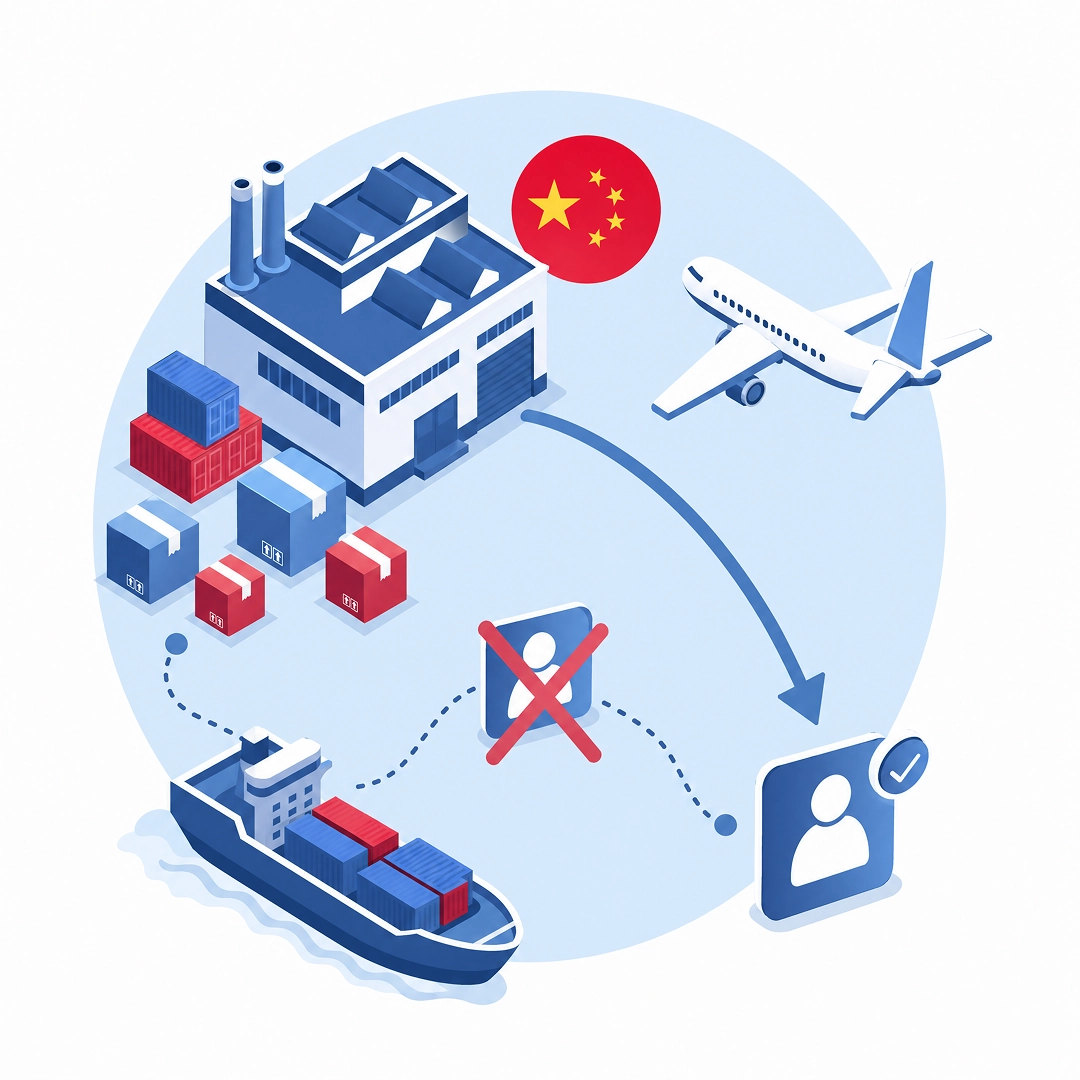


Cutting 20–40% off your cost of goods and dealing with the factory directly is realistic. Here’s how to build a China sourcing operation that skips the agent markup.
Buying direct from a China factory is a working model for small and mid-sized businesses. Remove the extra link in the chain and you get factory pricing, a direct line to the manufacturer, and control over every stage of the deal. Below is a step-by-step look at how to source on your own — and where to lay down a safety net.
Why factory-direct beats working through an agent
Buying from China direct strips out the hidden “full-service” markups that agents and trading companies often add — commonly 10–40% on top of the unit price. But it isn’t only about money.
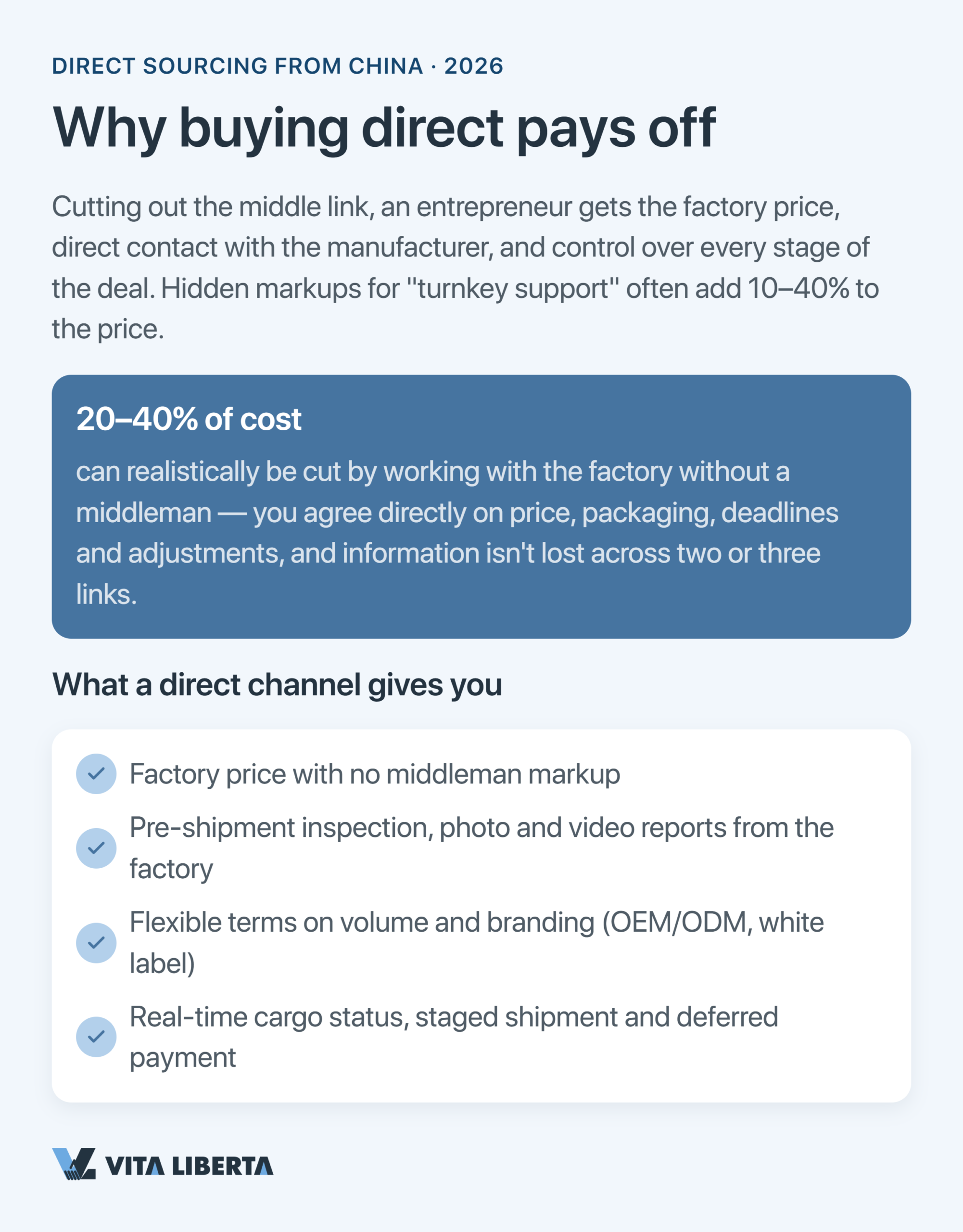
Savings, speed and quality control.
Working with the factory without a middleman, you negotiate price, packaging, lead times and tweaks yourself. A direct channel gives you several advantages:
- factory pricing with no intermediary margin;
- the option to order a pre-shipment inspection before goods leave;
- photo and video reports straight from the production line;
- flexible terms on volume and branding (OEM/ODM, white label).
Transparent communication cuts errors in SKUs, colours and dates — information no longer passes through two or three hands. You also get real-time cargo status without chasing updates secondhand, plus room to negotiate staged shipments and deferred payment. In short: fewer links, lower price, more control.
When an agent still earns their fee.
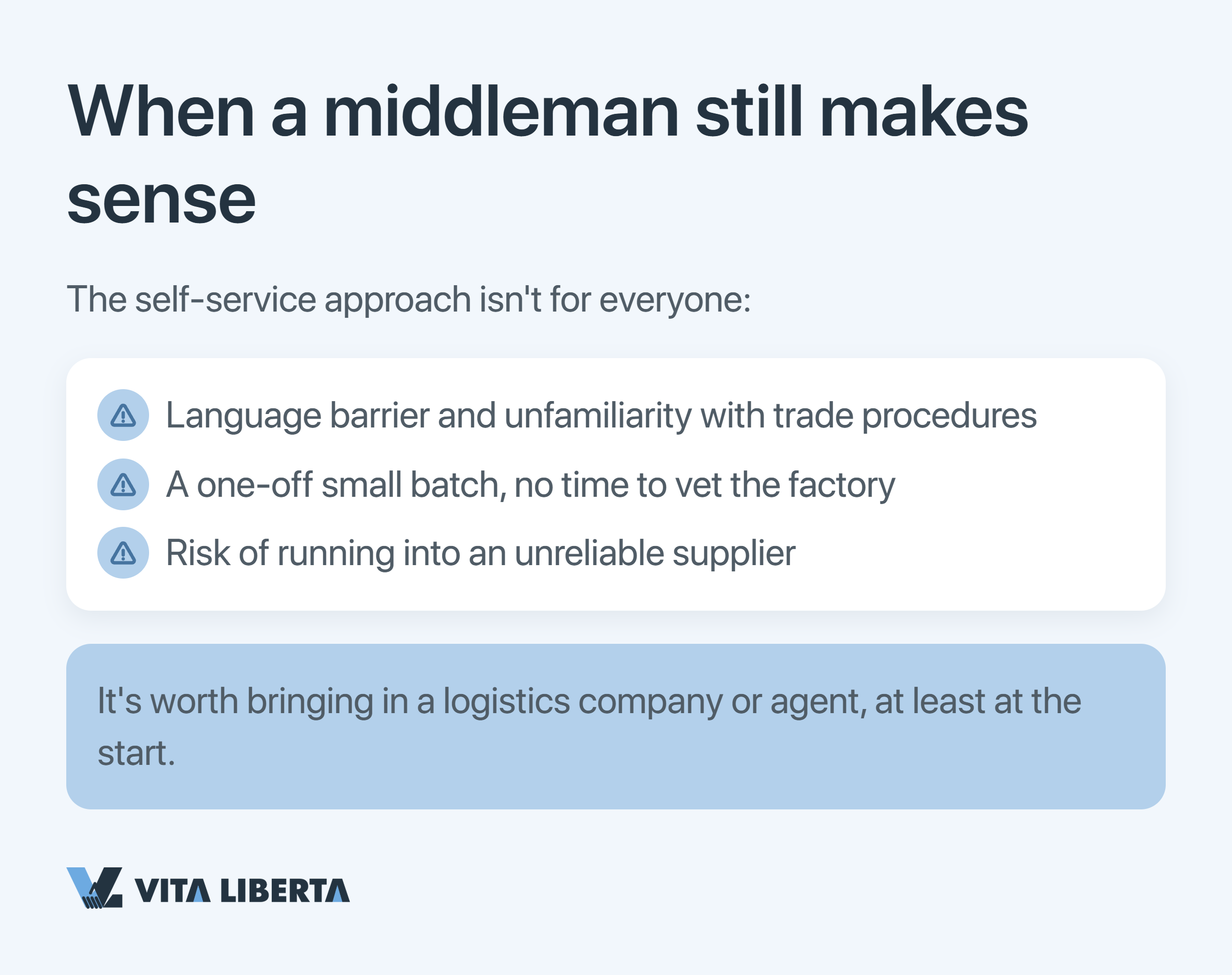
The DIY route isn’t for everyone. The language barrier, unfamiliar trade procedures and the risk of a dishonest supplier are real obstacles. For a one-off small order, with no time to vet a factory or handle paperwork, bringing in a sourcing agent or freight forwarder — at least at the start — is the sensible call.
Where and how to find reliable suppliers in China
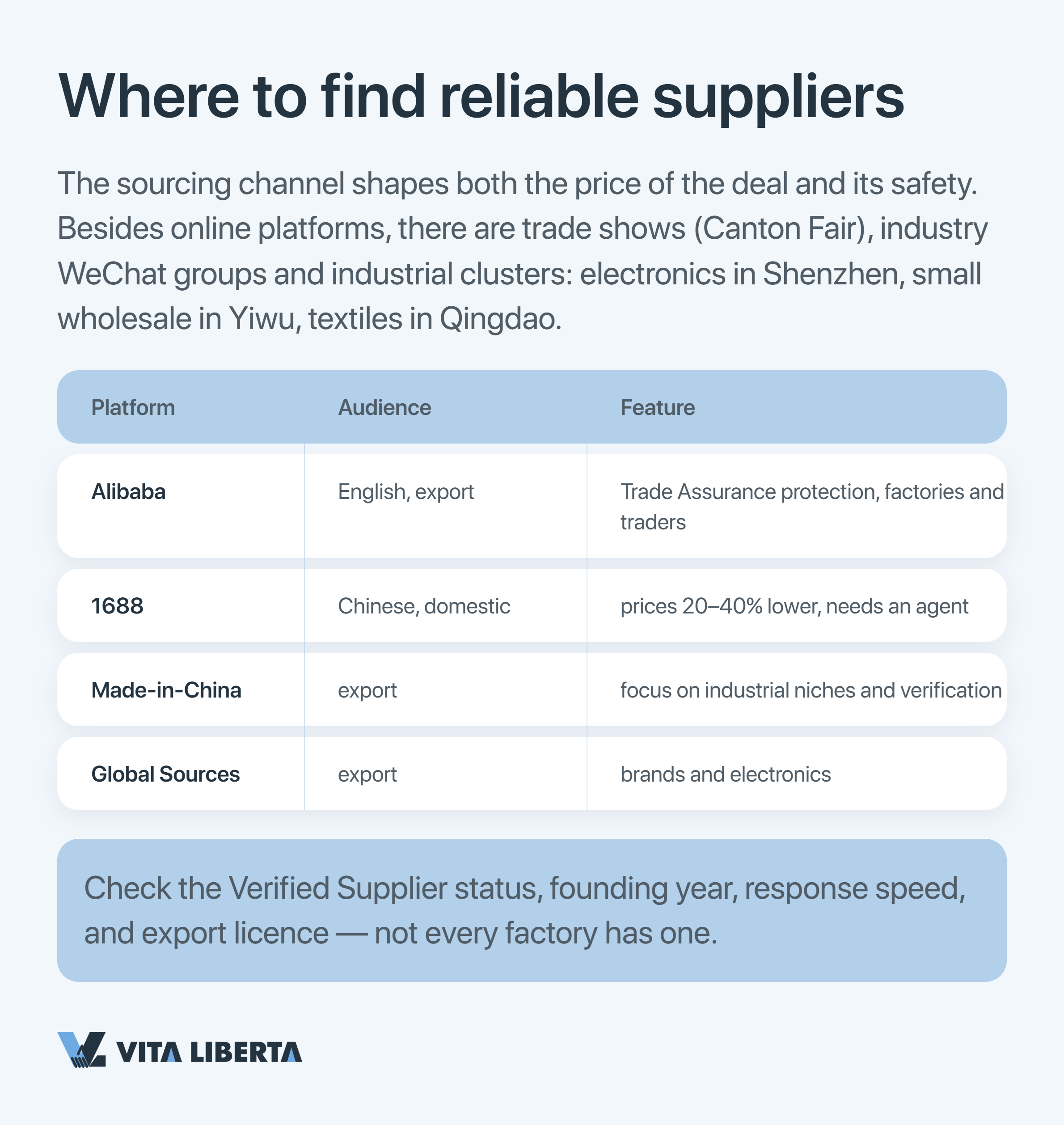
Your sourcing channel sets both the price and the safety of the deal. Beyond online marketplaces there are trade fairs (the Canton Fair), industry WeChat groups and regional clusters: electronics concentrate in Shenzhen, small-goods wholesale in Yiwu, textiles in Qingdao.
Want to buy direct from China?
- Reach manufacturers directly
- Supplier vetted before the deal
- Direct payments set up
B2B platforms: Alibaba, 1688, Made-in-China, Global Sources. Each platform solves a different problem.
| Platform | Language / audience | What stands out |
| Alibaba | English, export | Trade Assurance escrow; factories and traders |
| 1688 | Chinese, domestic market | prices 20–40% lower; usually needs an agent |
| Made-in-China | export | industrial niches and verification |
| Global Sources | export | brands and electronics |
When you compare, look at Verified Supplier status, year established, response speed and whether they hold an export licence — not every factory does.
How to vet a factory and spot a scammer.
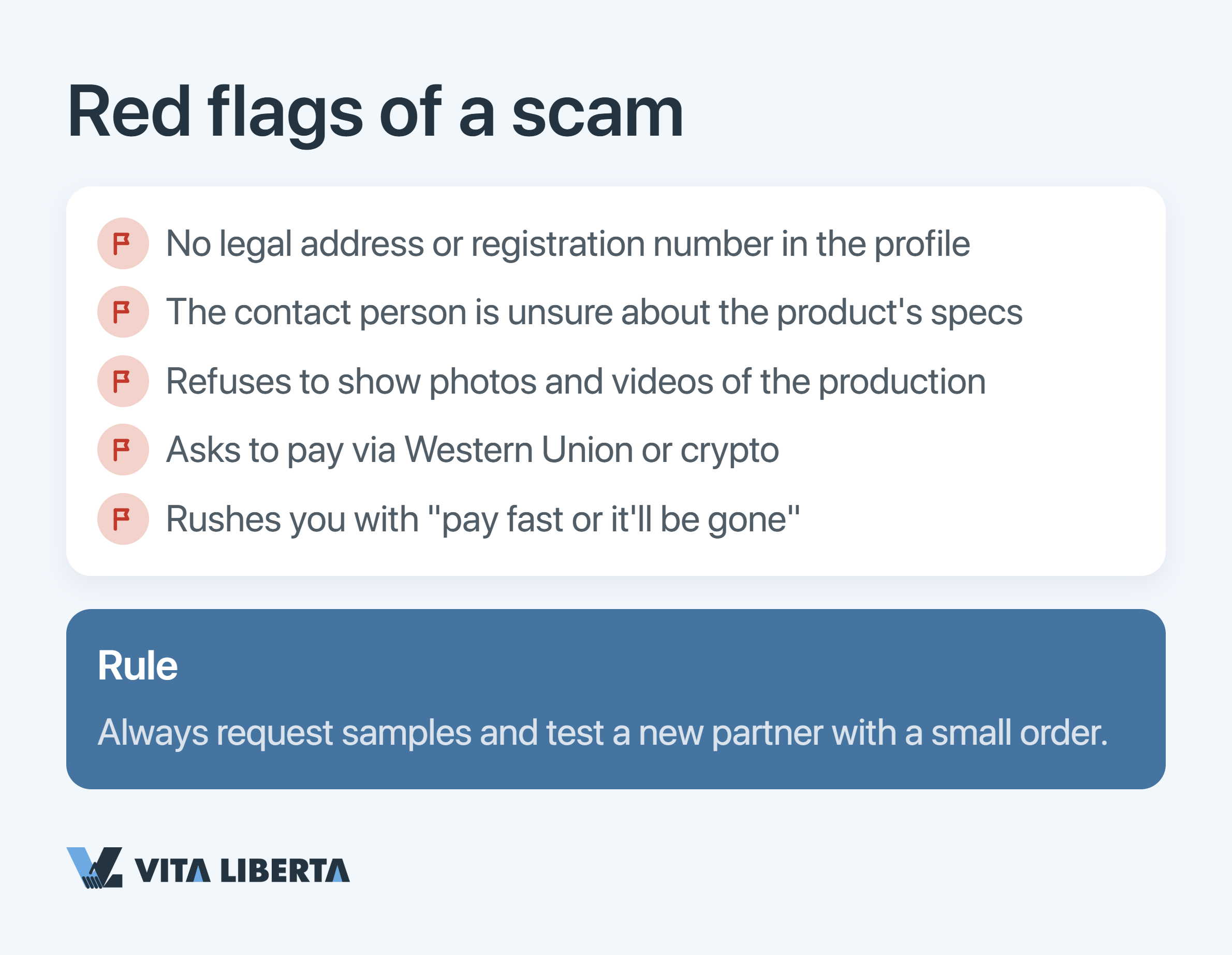
Finding a supplier is half the job. Before you pay, filter out traders posing as manufacturers and outright fakes. Red flags:
- no registered address or business-licence number on the profile;
- a contact who fumbles the product specs;
- refusal to share factory photos and video;
- a request to pay by Western Union or crypto;
- pushy “pay fast or you’ll miss out” pressure.
Always request samples and test a new partner with a small first order.
Contract, Incoterms and paying the factory
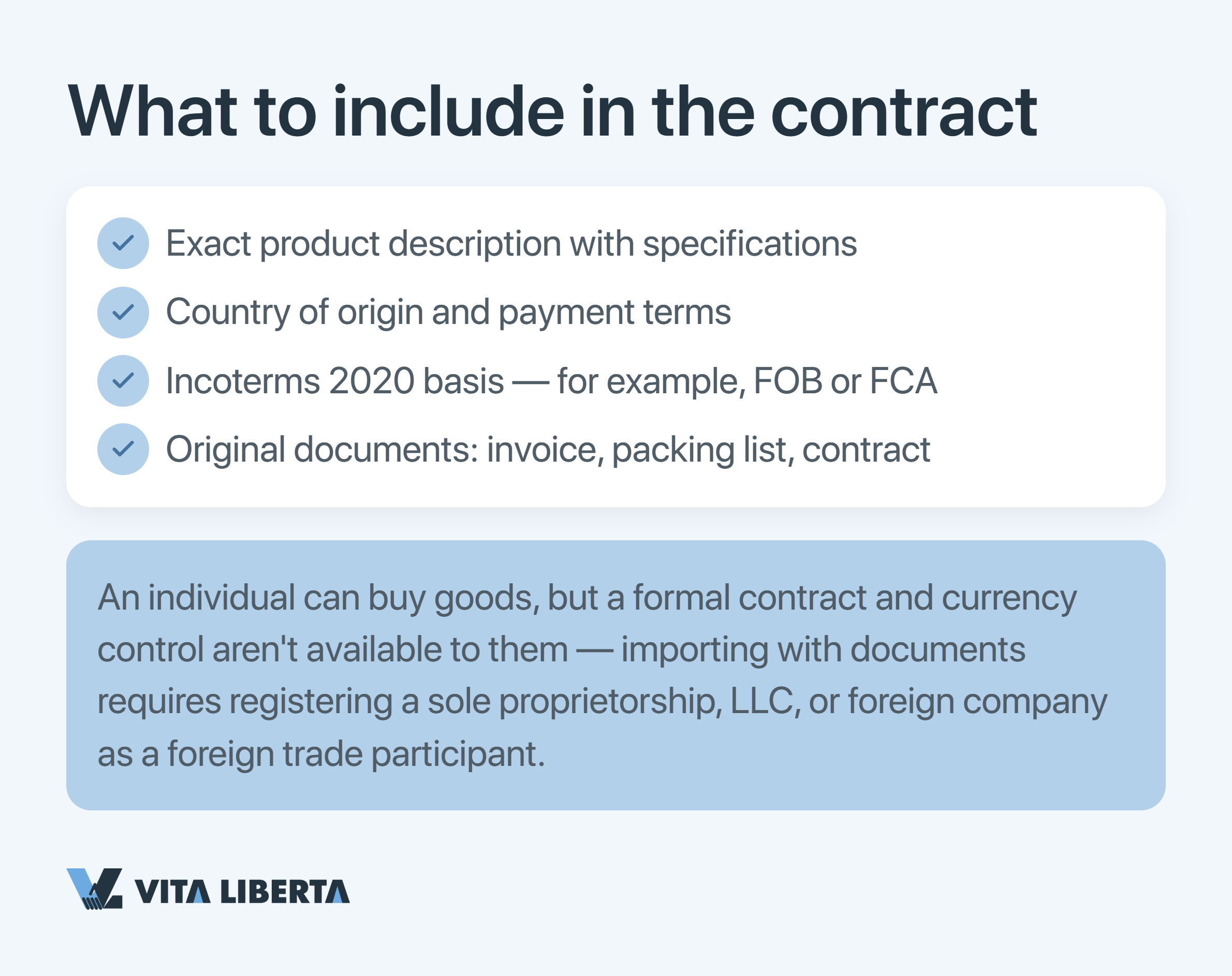
Even a perfectly chosen factory won’t save a poorly papered deal. A direct contract should spell out the goods and their specs, country of origin, payment and delivery terms, the Incoterms 2020 basis (FOB or FCA, say) and the supplier’s duty to hand over original documents — commercial invoice, packing list, contract.
Paying in RMB and currency control.
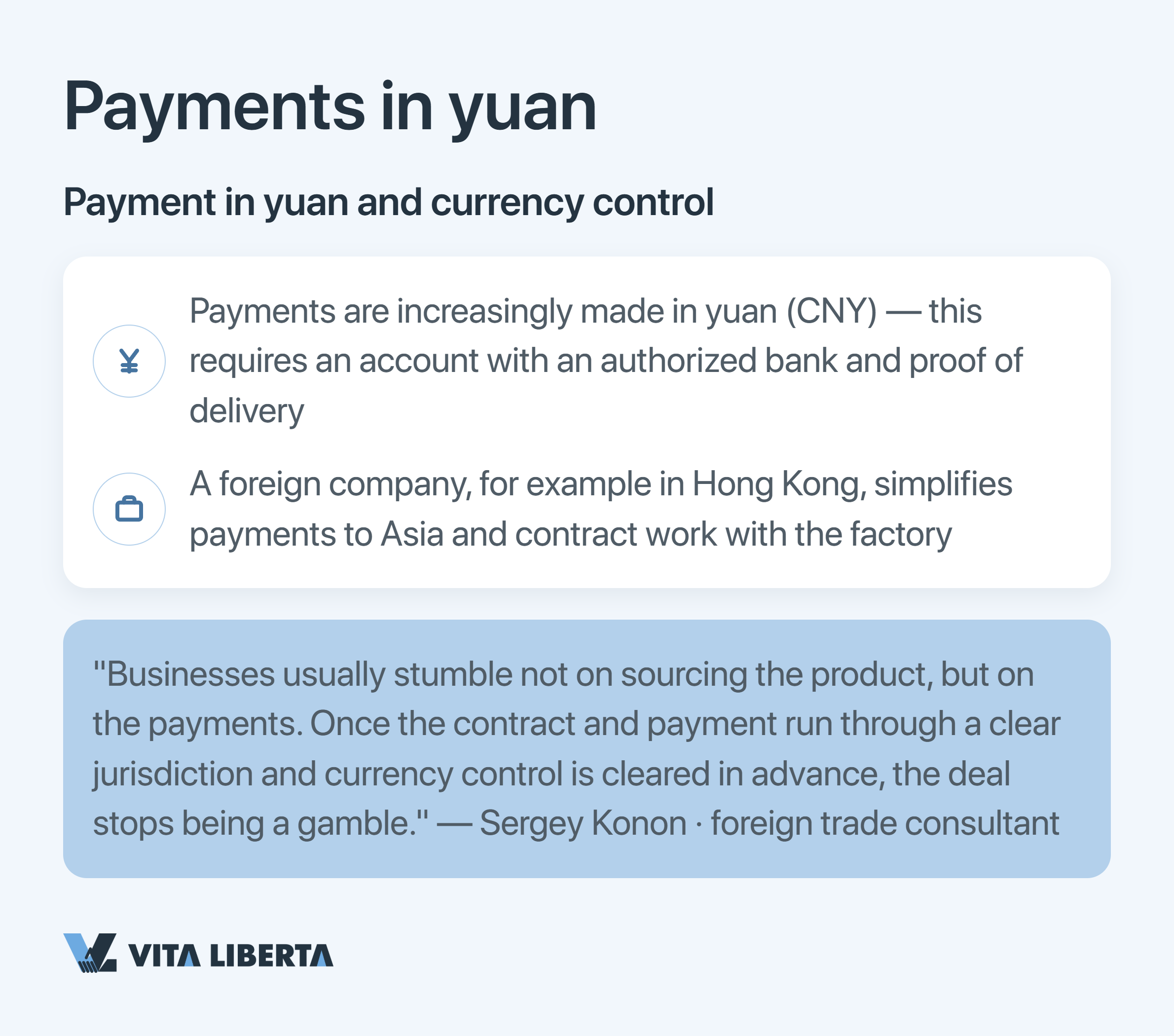
Cross-border payments into China run through the banking system, and mistakes there are costly. Most 1688 suppliers price in RMB and accept only domestic channels (Alipay, WeChat Pay, local bank transfer), so overseas buyers often settle through a sourcing agent or a payment platform such as WorldFirst that lets you pay in CNH without a mainland account. RMB is a controlled currency — its rate is set by the People’s Bank of China — which is why a clean payment trail matters. An individual can place an order, but a formal contract and a proper payment record are far easier through a registered business. Many traders run their China contracts and payments through an offshore company — a Hong Kong company is a common choice — which simplifies payments into Asia and the contractual side with the factory.
“Where businesses most often trip up isn’t sourcing the product — it’s the payment. Once the contract and the transfer run through a transparent jurisdiction and currency control is cleared in advance, the deal stops being a lottery and becomes a process you can manage,” says Sergey Konon, foreign-trade consultant.
Logistics: getting the cargo out of China
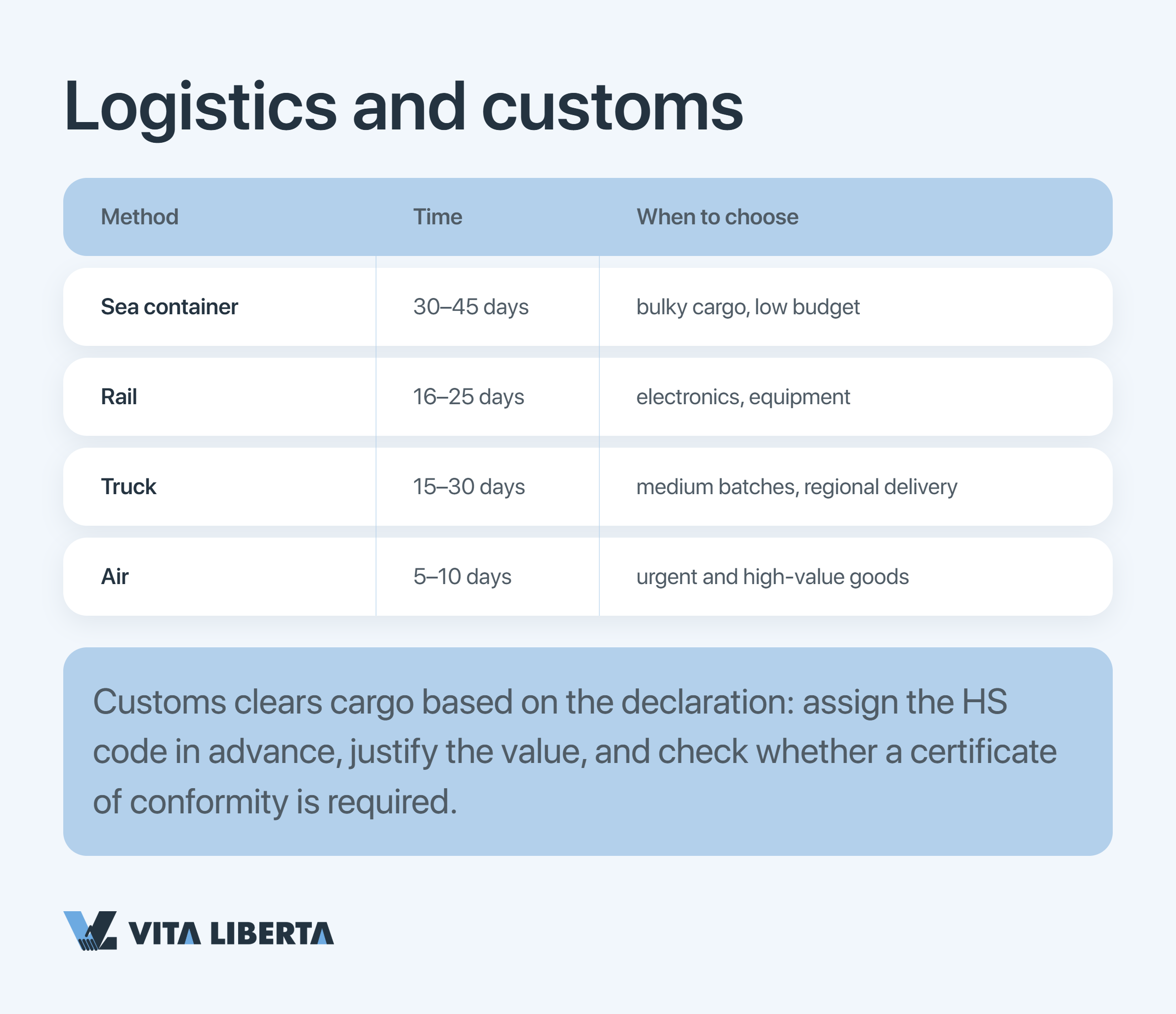
Pick the shipping method by cargo type, budget and urgency. Small mixed orders suit consolidation at a Chinese warehouse (LCL); large volumes go full container (FCL).
| Method | Transit | When to choose |
| Sea container | 30–45 days | bulky cargo, tight budget |
| Rail | 16–25 days | electronics, equipment |
| Road | 15–30 days | medium loads, overland routes |
| Air | 5–10 days | urgent or high-value goods |
With sea consolidation you pay only for your slot in the container but wait for the load to fill. Rail is the price/speed sweet spot for tech, road suits door-to-door overland delivery, and air is justified only for high value-per-kilo goods.
Customs clearance and certification
At the border, goods are released against a declaration filed by the importer. Before arrival, classify the cargo under the correct HS code, support the value with your contract and invoice, then calculate the duty and any import tax due in your destination market. Some categories enter only with a certificate or conformity mark (CE marking in the EU, for example) — and lab samples must be documented legally. Errors on paper mean delays or a returned shipment. Two clean routes: run the goods under your own contract and hand the carrier transport only, or hand the whole procedure to a customs broker. If your goods land in Hong Kong, note it’s a free port — general goods carry no import duty, though an import/export declaration must still be filed with Hong Kong Customs.
A step-by-step plan
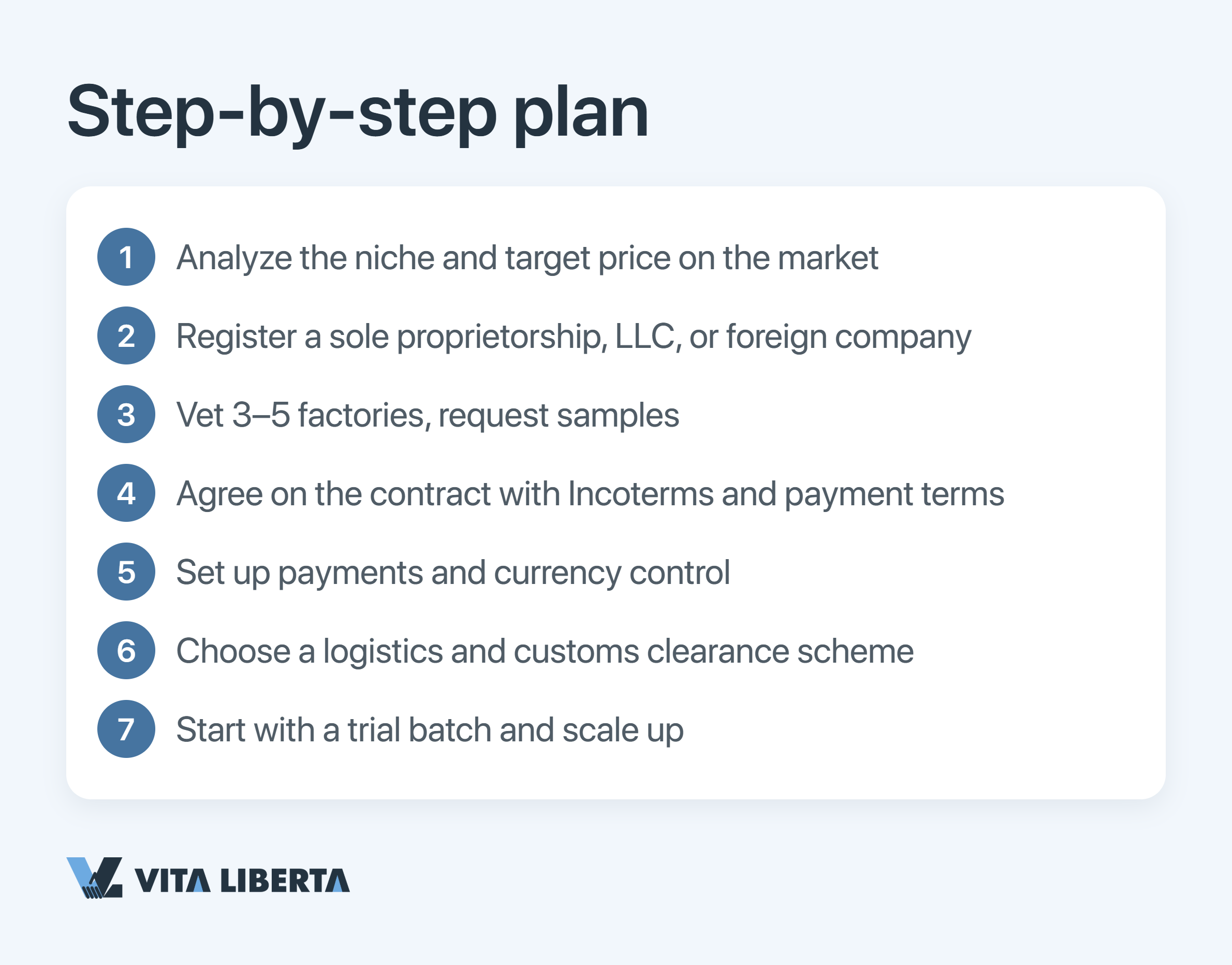
- analyse the niche and your target market price;
- register a company (or use an offshore entity such as a Hong Kong company) as the importer of record;
- find and vet 3–5 factories; request samples;
- agree a contract with Incoterms and payment terms;
- set up payments and your currency trail;
- choose your logistics and customs-clearance route;
- start with a trial batch, then scale.
Buying direct from China gives a business factory pricing, quality control and a transparent deal. The key is a systematic approach: a vetted supplier, a sound contract, correct payments and well-planned logistics. Start small, get the process running, then scale up your orders — that’s how you build durable, profitable imports.
Ready to cut out the middlemen?
- Direct sourcing organised
- Quality and logistics control
- Save on the middleman margin
FAQ
Yes. You can buy goods as an individual, but a formal contract and a clean payment trail are far easier through a registered business — or an offshore vehicle such as a Hong Kong company acting as importer of record.
Usually, at the listing level — 20–40% lower. But 1688 is in Chinese, prices in RMB, and most suppliers ship and take payment only domestically, so overseas buyers need an agent or a payment platform. Alibaba targets international buyers, works in English and protects orders through Trade Assurance.
Verify the business licence and profile, insist on factory photos and video, request samples, and keep the first order small. Refuse Western Union or crypto payments.
Most 1688 suppliers take only RMB through domestic channels. Pay via a sourcing agent who settles locally, or use a platform such as WorldFirst that lets you pay in CNH without a mainland account.
Some categories do. Many goods import freely, but others require a certificate or conformity mark (CE in the EU, for example). Confirm the requirement against your product’s HS code before you order.