
- Home
- Calculators
- How to work with China
How to work with China
Enter what you will do, revenue, costs and staff in China — the calculator compares four ways to work with China and works out the taxes in China for each.
- 4 formsWFOE, joint venture, representative office, Hong Kong
- ≈4.4%of costs — representative office corporate tax, even without income
- 183 dayspermanent establishment threshold for services
Vita Liberta — licensed company secretary in Hong Kong · TCSP TC007080Rates checked: November 2026

How to work with China: WFOE, representative office or a Hong Kong company
Step 1 · What you will do
Step 2 · What you will need in Chinatick what you cannot do without — it decides which form fits
Step 3 · Annual figures — for the tax estimateoptional: the form is chosen without them
Pick the activity — we compare the ways to work with China; revenue and costs refine the taxes.
Indicative, as of November 2026: Corporate Income Tax Law (25%, 5% for small enterprises to 31.12.2027), VAT Law (6% on services), Interim Measures on taxation of representative offices (deemed profit from 15%), Regulations on representative offices of foreign enterprises (2010), the Mainland–Hong Kong double tax arrangement. Not covered: sector licences, WFOE output VAT, Hong Kong and home-country taxes.

*How the ways to work with China differ
How the form is chosen
- Sales in China
Fapiao, staff and sales inside China need a company in China: a WFOE or a joint venture. For import and export, foreign trade goes into the business scope and the company records with customs — no separate licence since 30 Dec 2022.
- Representing the company
A representative office cannot sell and pays corporate tax on its costs — about 4.4% of them; VAT only if the tax office assigns it. A WFOE without profit pays no corporate tax.
- Working from Hong Kong
Selling goods and sourcing from Hong Kong are not taxed in China; for services the client withholds 6% VAT.
- Risk
If Hong Kong staff provide services in China for more than 183 days in 12 months, a permanent establishment arises — 25% tax.
Legal basis: PRC Corporate Income Tax Law (25%; 5% for small enterprises to 31.12.2027); PRC VAT Law (2024, in force from 1 Jan 2026) — 6% on services, withholding for foreign sellers; Urban Maintenance and Construction Tax Law, Art. 3 — no surcharge on VAT withheld from foreign sellers; Interim Measures on taxation of representative offices of foreign enterprises (2010) — deemed profit from 15%; Regulations on representative offices of foreign enterprises (State Council Decree No. 584, 2010); Mainland–Hong Kong double tax arrangement, Art. 5 — permanent establishment for services over 183 days in 12 months.
We choose how to work with China and set it up
We compare the options against your numbers, set up a WFOE or a representative office and link it with a Hong Kong company through our team in Hangzhou.

Questions about how to work with China
Representative office or WFOE — which is better?
A representative office pays corporate tax on its costs (about 4.4% of them, plus VAT if the tax office assigns it) even without income and cannot sell. A WFOE pays corporate tax only on profit and can sell, hire and hold licences, but needs capital and bookkeeping. Most businesses now choose a WFOE.
Can one work with China without a company in China?
Yes, if sales and sourcing run from abroad and there are no staff in China — for example, a Hong Kong company selling to a Chinese importer or buying from a Chinese factory. Hiring in China and selling inside China with fapiao need a company in China.
What taxes does a Hong Kong company pay on services to clients in China?
The Chinese client withholds 6% VAT and pays it over; no local surcharges apply to that VAT. No corporate tax arises in China while the Hong Kong company has no permanent establishment.
What is a permanent establishment?
Under the Mainland–Hong Kong arrangement (Art. 5) it is an office, a branch, or services provided by staff in China for more than 183 days in any 12 months. Profit from that activity is then taxed in China at 25%.
How many staff can a representative office have?
A chief representative and up to 3 representatives — foreigners or PRC nationals. Other local staff are engaged through an authorised HR agency.
When is a joint venture needed?
When the activity is restricted by the Negative List: for example clinics, market research and some telecom services. Check it in the “Negative List and licences” tool.
How is profit taken from a WFOE to Hong Kong?
As dividends after corporate tax and the statutory reserve. Withholding tax is 10%, or 5% under the Mainland–Hong Kong arrangement with a 25%+ stake and beneficial ownership.
Other calculators
 HKStamp duty on a share transferWhat the buyer and the seller payCalculate →
 HKProfits tax and provisional taxTwo-tier rates, 75% and 25% instalmentsCalculate →
 HKSalaries taxSalary, bonuses, director’s fees — 2–17%Calculate →
 HKMPF and employee costEmployer and employee contributions, insuranceCalculate →
 HKFinancial year and corporate filingsFirst and later years, IRD, annual return, BR, AGMCalculate →
 HKCompliance calendarAll deadlines from incorporation and penaltiesCalculate →
 HKLate filing penaltiesAnnual return, BR renewal, taxCalculate →
 HKOffshore claim testCould the exemption apply to your profits?Calculate →
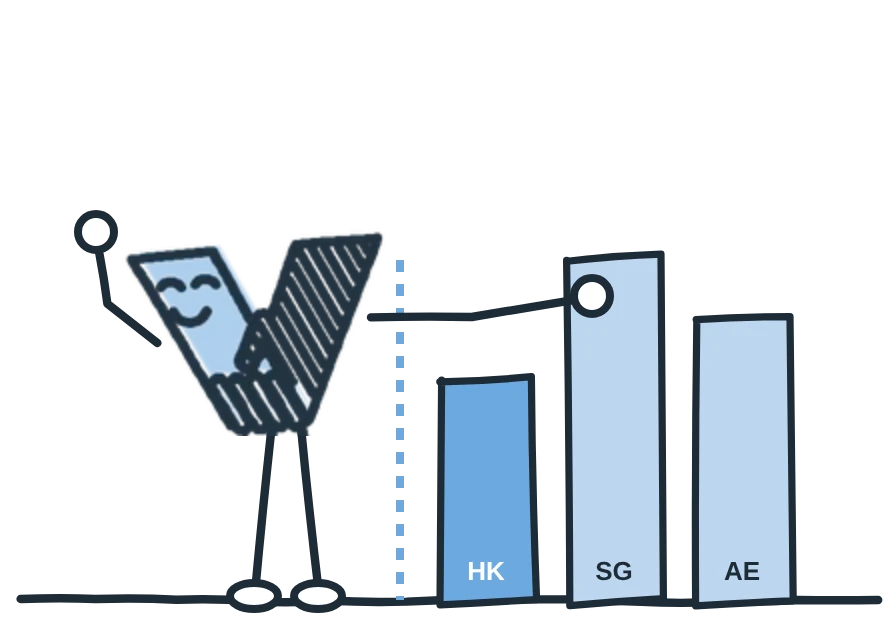 HKHong Kong, Singapore or UAEIndicative tax burdenCalculate →
 PRCExport VAT refundHS code or product — refund and marginCalculate →
 PRCDividends from China to Hong Kong10% or 5% withholding taxCalculate →
 PRCTax burden in ChinaVAT, surcharges, corporate tax, contributions, dividendsCalculate →
 PRCIndividual income tax in ChinaSalary and bonus — tax and net payCalculate →
 PRCNegative List and licencesOpen to foreign capital and which licencesCalculate →
 PRCShare capital in ChinaPayment deadline and what the start needsCalculate →
 PRCWork permit in ChinaPoints and Category A, B or CCalculate →PRCCompliance calendar in ChinaTaxes, annual report, audit, SAFE reportingCalculate →