
- Home
- Calculators
- Negative List and licences
Negative List and licences in China
Pick an activity and a city — we show whether it is open to foreign capital, what stake is allowed and which licences you need besides the business licence.
- 29 itemsof restrictions in the 2024 Negative List
- 100%foreign capital — in anything not on the list
- 1 Nov 2024the current edition has applied since
Vita Liberta — licensed company secretary in Hong Kong · TCSP TC007080Rates checked: November 2026
Is it open to foreign capital and which licences are needed
Step 1 · What the company will do
- 01 Crop farmingAgriculture, forestry, animal husbandry, fishing
- 02 ForestryAgriculture, forestry, animal husbandry, fishing
- 03 Animal husbandryAgriculture, forestry, animal husbandry, fishing
- 04 FishingAgriculture, forestry, animal husbandry, fishing
- 05 Agricultural support servicesAgriculture, forestry, animal husbandry, fishing
- 06 Coal miningMining
- 07 Oil and gas extractionMining
- 08 Ferrous metal ore miningMining
- 09 Non-ferrous metal ore miningMining
- 10 Non-metallic mineral miningMining
- 11 Mining support servicesMining
- 12 Other miningMining
- 13 Agri-food processingManufacturing
- 14 Food manufacturingManufacturing
- 15 Beverages, alcohol and teaManufacturing
- 16 Tobacco productsManufacturing
- 17 TextilesManufacturing
- 18 Apparel and accessoriesManufacturing
- 19 Leather, fur and footwearManufacturing
- 20 Wood and bamboo productsManufacturing
- 21 FurnitureManufacturing
- 22 PaperManufacturing
- 23 PrintingManufacturing
- 24 Stationery, sports goods and toysManufacturing
- 25 Petroleum and fuel processingManufacturing
- 26 ChemicalsManufacturing
- 27 PharmaceuticalsManufacturing
- 28 Chemical fibresManufacturing
- 29 Rubber and plasticsManufacturing
- 30 Non-metallic mineral productsManufacturing
- 31 Ferrous metal smeltingManufacturing
- 32 Non-ferrous metal smeltingManufacturing
- 33 Metal productsManufacturing
- 34 General-purpose machineryManufacturing
- 35 Special-purpose machineryManufacturing
- 36 Motor vehiclesManufacturing
- 37 Rail, ship, aerospace equipmentManufacturing
- 38 Electrical equipmentManufacturing
- 39 Computers, telecoms and electronicsManufacturing
- 40 InstrumentsManufacturing
- 41 Other manufacturingManufacturing
- 42 RecyclingManufacturing
- 43 Repair of metal products and equipmentManufacturing
- 44 Electricity and heatElectricity, heat, gas and water
- 45 Gas supplyElectricity, heat, gas and water
- 46 Water supplyElectricity, heat, gas and water
- 47 Building constructionConstruction
- 48 Civil engineeringConstruction
- 49 InstallationConstruction
- 50 Decoration and other constructionConstruction
- 51 WholesaleWholesale and retail
- 52 RetailWholesale and retail
- 53 Rail transportTransport, storage and postal
- 54 Road transportTransport, storage and postal
- 55 Water transportTransport, storage and postal
- 56 Air transportTransport, storage and postal
- 57 Pipeline transportTransport, storage and postal
- 58 Freight forwarding and multimodal transportTransport, storage and postal
- 59 Handling and warehousingTransport, storage and postal
- 60 Postal and courierTransport, storage and postal
- 61 AccommodationAccommodation and catering
- 62 CateringAccommodation and catering
- 63 Telecoms, broadcasting and satelliteTelecoms, software and IT
- 64 Internet servicesTelecoms, software and IT
- 65 Software and IT servicesTelecoms, software and IT
- 66 Monetary and banking servicesFinance
- 67 Capital market servicesFinance
- 68 InsuranceFinance
- 69 Other financial servicesFinance
- 70 Real estateReal estate
- 71 LeasingLeasing and business services
- 72 Business services and consultingLeasing and business services
- 73 Research and developmentResearch and technical services
- 74 Professional technical servicesResearch and technical services
- 75 Technology promotion servicesResearch and technical services
- 76 Water managementWater, environment, public facilities
- 77 Environmental protectionWater, environment, public facilities
- 78 Public facilities managementWater, environment, public facilities
- 79 Land managementWater, environment, public facilities
- 80 Household servicesHousehold services and repair
- 81 Repair of vehicles, electronics and household goodsHousehold services and repair
- 82 Other servicesHousehold services and repair
- 83 EducationEducation
- 84 HealthHealth and social work
- 85 Social workHealth and social work
- 86 News and publishingCulture, sports and entertainment
- 87 Broadcasting, film and recordingCulture, sports and entertainment
- 88 Culture and artsCulture, sports and entertainment
- 89 SportsCulture, sports and entertainment
- 90 EntertainmentCulture, sports and entertainment
Step 2 · Where and with what stake
- Negative List—
- Foreign stake allowed—
- Your stake—
- Sector licences—
Pick an activity — we show whether it is open to foreign capital and which licences are needed.
An indicative check against the 2024 Negative List (in force from 1 November 2024; no newer edition as of November 2026), the 2024 pilots and sector rules as of November 2026. The free trade zone list (2021 edition) is applied where it is softer. Not covered: the Market Access Negative List that applies to all companies, national security review, capital and staff conditions inside licences, local rules. The final terms are set by the current Negative List, sector rules and guidance from the regulators (SAMR, NDRC, MOFCOM) — check the activity against the full text before investing.

*How foreign access works in China
Check exact terms against the full text of the 2024 Negative List.
How access is checked
- Activity
The code under China’s GB/T 4754 classification and the line of business within it: restrictions usually hit a narrow part of a group, such as online games rather than the whole internet.
- Negative List
If the activity is not on the list, a foreign company works like a Chinese one. If it is, the list sets a condition: a ban, an equity cap, Chinese control or joint venture only.
- Pilots
Since 2024 some cities offer more openness: data centres and cloud, hospitals with 100% foreign capital, cell and gene therapy.
- Licences
Everyone needs the business licence. Separate licences apply to food, medicines, medical devices, telecom, construction, transport, education, healthcare and other sectors.
Legal basis: PRC Foreign Investment Law (2019): Art. 4 — national treatment and the Negative List, Art. 28 — prohibited and restricted sectors, Art. 30 — licences on the same terms, Art. 34 — investment reporting, Art. 35 — national security review; Special Administrative Measures for Foreign Investment Access (Negative List), 2024 edition, NDRC and MOFCOM, in force from 1 November 2024; MIIT’s 2024 notice on the value-added telecom pilot; the MOFCOM, NHC and NMPA notice of September 2024 on healthcare pilots; Catalogue of Encouraged Industries for Foreign Investment, 2025 edition, in force from 1 February 2026.
We check the activity and set up your company in China
We confirm foreign access, word the business scope for the licence and arrange the licences with our team in Hangzhou.
Questions about the Negative List and licences
What is the Negative List?
A list of sectors where foreign capital is prohibited or allowed on conditions. The 2024 edition has 29 items. Everything not on it is open to foreign companies on the same terms as Chinese ones (Foreign Investment Law, Arts. 4 and 28).
What is the difference between restricted and prohibited?
Prohibited — neither 100% nor a joint venture. Restricted — allowed on a condition: a stake of 50% or less, Chinese control, joint venture only or, in education, a school led by the Chinese side.
Can an online store or marketplace be 100% foreign-owned?
Yes. E-commerce is expressly carved out of the 50% cap on telecom services. An own online store needs an ICP filing; a platform for other sellers needs an EDI licence.
Why are online games closed?
Releasing an online game is online publishing: it needs a publishing approval, and online publishing is closed to foreign capital (item 13). Foreign developers work through a Chinese publisher under a licence agreement.
Can a clinic be 100% foreign-owned?
A clinic — no: medical institutions are joint venture only (item 22). A hospital — yes, under the 2024 pilot in Beijing, Tianjin, Shanghai, Nanjing, Suzhou, Fuzhou, Guangzhou, Shenzhen and Hainan, except traditional Chinese medicine hospitals and buying public ones.
What does a Hong Kong company bring as investor?
Under CEPA, Hong Kong service suppliers get softer terms than the Negative List in a number of sectors (note 9 to the list). The Hong Kong company must meet CEPA requirements, such as real business in Hong Kong. The benefits are not automatic: the terms depend on CEPA commitments for the specific sector and are checked sector by sector.
What happens if a company is set up in a prohibited sector?
It will not be set up: the market regulator and sector regulators reject filings that do not meet the Negative List (Foreign Investment Law, Art. 28, and note 4 to the list). If the activity is carried on anyway, it is stopped and income may be confiscated (Art. 36).
Is anything needed besides the Negative List?
Yes. The Market Access Negative List applies to all companies, Chinese ones included; sector licences set capital, staff and premises conditions; deals touching national security go through a separate review (Art. 35). Free trade zones have their own list, which may be softer.
What is the Catalogue of Encouraged Industries?
The reverse list — sectors where foreign investment is supported. The 2025 edition applies from 1 February 2026 and has 1,679 entries. Encouraged projects may get duty-free import of equipment for own use and priority for land, and in western regions 15% corporate tax until 2030 (the regional part of the catalogue also covers central regions, but the 15% relief is for western regions only).
How long do licences take?
It depends on the sector and the city: filings — from a few days, food and medical device trading licences — usually a few weeks, telecom and drug licences — months. Many licences need ready premises, so the company and the lease come first.
Other calculators
 HKStamp duty on a share transferWhat the buyer and the seller payCalculate →
 HKProfits tax and provisional taxTwo-tier rates, 75% and 25% instalmentsCalculate →
 HKSalaries taxSalary, bonuses, director’s fees — 2–17%Calculate →
 HKMPF and employee costEmployer and employee contributions, insuranceCalculate →
 HKFinancial year and corporate filingsFirst and later years, IRD, annual return, BR, AGMCalculate →
 HKCompliance calendarAll deadlines from incorporation and penaltiesCalculate →
 HKLate filing penaltiesAnnual return, BR renewal, taxCalculate →
 HKOffshore claim testCould the exemption apply to your profits?Calculate →
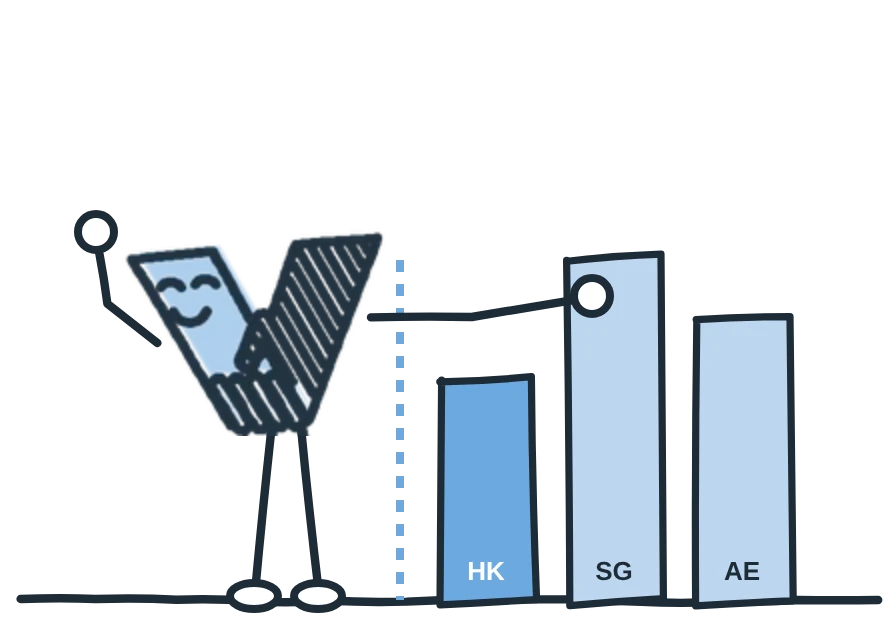 HKHong Kong, Singapore or UAEIndicative tax burdenCalculate →
 PRCExport VAT refundHS code or product — refund and marginCalculate →
 PRCDividends from China to Hong Kong10% or 5% withholding taxCalculate →
 PRCTax burden in ChinaVAT, surcharges, corporate tax, contributions, dividendsCalculate →
 PRCIndividual income tax in ChinaSalary and bonus — tax and net payCalculate →
 PRCShare capital in ChinaPayment deadline and what the start needsCalculate →
 PRCWork permit in ChinaPoints and Category A, B or CCalculate →
 PRCHow to work with ChinaWFOE, representative office or Hong KongCalculate →PRCCompliance calendar in ChinaTaxes, annual report, audit, SAFE reportingCalculate →